


Marilyn Geewax
Marilyn Geewax is a contributor to NPR.
Before leaving NPR, she served as senior business news editor, assigning and editing stories for radio. In that role she also wrote and edited for the NPR web site, and regularly discussed economic issues on the mid-day show Here & Now from NPR and WBUR. Following the 2016 presidential election, she coordinated coverage of the Trump family business interests.
Before joining NPR in 2008, Geewax served as the national economics correspondent for Cox Newspapers' Washington Bureau. Before that, she worked at Cox's flagship paper, the Atlanta Journal-Constitution, first as a business reporter and then as a columnist and editorial board member. She got her start as a business reporter for the Akron Beacon Journal.
Over the years, she has filed news stories from China, Japan, South Africa, and Europe. She helped edit coverage for NPR that won the Edward R. Murrow Award and Heywood Broun Award.
Geewax was a Nieman Fellow at Harvard, where she studied economics and international relations. She earned a master's degree at Georgetown University, focusing on international economic affairs, and has a bachelor's degree from The Ohio State University.
She is the former vice chair of the National Press Club's Board of Governors, and currently serves on the board of the Society of American Business Editors and Writers.
-
 Marilyn Geewax, who recently retired as an NPR business editor, returned to Ohio for her class's 45th reunion. The visit showed how things changed dramatically for retirees in just one generation.
 -
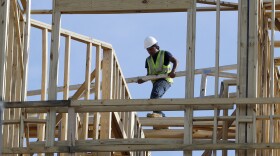 The U.S. economy expanded at a decent pace in the final months of 2017. But most economists had been expecting stronger growth. This dashed hopes for three straight quarters of growth above 3 percent.
 -
 Trump has continued to own a business empire while serving as president — thus showing that expectations about handling presidential wealth, businesses and brands were about norms, not laws.
 -
 President Trump asked his top trade adviser to determine whether to launch a probe into Chinese trade practices, particularly those forcing U.S. companies in China to turn over intellectual property.
 -
 Shaub, who has had many battles with the Trump administration, says he is quitting to become a legal activist. He says the "current situation" shows tougher ethics action is needed.
 -
 Jared Kushner's sister recently pitched a New Jersey project to investors in China. Such investors could get a crack at an immigration visa to the United States in exchange for $500,000.
 -
After criticism that the controversial Corey Lewandowski promised access to the president and hadn't registered as a lobbyist, he's stepping aside and says he will focus on speaking engagements.
-
 Walter Shaub of the Office of Government Ethics, which lacks enforcement power, says the House Oversight Committee does not seem to be matching the surge of concern about the Trump administration.
 -
 The General Services Administration says while the contract bars elected officials, the Trump Organization may lease the Old Post Office because President Trump moved his businesses into a trust.
 -
President Donald Trump's refugee ban in the Middle East could be one of the first conflicts of interest for the president, as his bans avoided nations that he has business ties in.


